As remote work and video conferencing become the norm, network quality directly determines communication efficiency and experience. This article focuses on the practical test of Taiwan Telecom's CN2 broadband, covering key metrics such as bandwidth, latency, jitter, and packet loss, and analyzes its actual usability and optimization suggestions in different meeting scenarios to help enterprises and individuals evaluate and enhance the remote collaboration experience.
This test used a multi-point testing method, including local LAN, intra-city ISP interconnection, and cross-sea transmission scenarios; The tool uses ping, iperf, Speedtest, and video conferencing platforms to simulate calls; Repeat measurements during weekday daytime and evening peak periods to cover typical network fluctuations.
In local and local tests, Taiwan Telecom's CN2 broadband generally exhibited low latency and stable jitter, with latency within a negligible range and minimal jitter; Latency for cross-sea or international links has risen significantly, but in most remote meeting scenarios, acceptable real-time performance and consistency are still maintained.
Measured bandwidth shows downloads and uplink during non-congestion periods close to the user's nominal value, with stable throughput during short cycles; There is some narrowing during evening peak hours, but overall transmission rates can meet the needs of high-definition video and file synchronization. Uplink bandwidth becomes a key bottleneck during concurrent uploads.
Audio is sensitive to latency and packet loss. In actual tests, CN2 broadband maintains low packet loss and stable jitter when audio is prioritized, resulting in good call clarity. Video streaming dynamically adjusts resolution and frame rate based on bandwidth; 1080p is usually smooth, while 4K depends on uplink bandwidth and terminal performance.
When multiple people share screens, collaborate editing, or transfer large files simultaneously, higher requirements are placed on uplink stability and LAN performance. Tests show that when CN2 networks are integrated with wired gigabit access and appropriate QoS strategies in enterprise environments, multi-user collaboration experiences are significantly better than scenarios relying solely on wireless access.
Cross-border conferences are significantly affected by physical distance and routing strategies, with increased delays and jitter being the norm. The high-quality international links of CN2 networks improve cross-border experience to some extent, but it is still recommended to use nearby local nodes or CDN acceleration for conference services to reduce latency and jitter risks.
During testing, it was found that CN2 broadband has excellent overall routing stability, with low probability of short-term jitter and packet loss. For critical enterprise business, it is still recommended to deploy dual-link backup, automatic failover, and monitoring alerts to shorten fault recovery time and ensure business continuity.
It is recommended to prioritize wired connections, prioritize QoS to ensure audio bandwidth, select conference servers close to the area, limit video resolution within bandwidth capacity, regularly monitor link quality, and update client terminal firmware. For remote teams, dedicated lines or SD-WAN can be used to enhance stability and controllability.
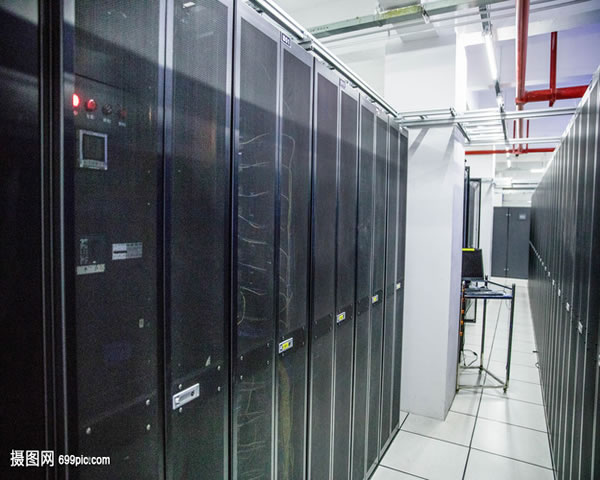
Overall, Taiwan Telecom's CN2 broadband performs robustly in most remote work and video conferencing scenarios, offering good latency and bandwidth protection. The key lies in reasonably configuring access methods and QoS strategies, and selecting appropriate meeting settings and link redundancy based on business needs to achieve a stable and smooth remote collaboration experience.
- Latest articles
- Popular tags
-

Taiwan Cn2 Broadband Cost Overview And Price/performance Analysis
this article conducts a comprehensive analysis of the cost and cost-effectiveness of taiwan's cn2 broadband to help users choose appropriate network services. -

Application And Experience Of Two-way Cn2 Virtual Host In Taiwan
discuss the application and experience of two-way cn2 virtual host in taiwan, including its advantages, application scenarios and user feedback. -

How To Choose A Suitable Taiwan CN2 Cloud Host To Improve Website Speed
This article introduces how to choose a suitable Taiwan CN2 cloud host to improve website speed and help users improve network performance and user experience.